Engineered Wood Supply: Production of E0 Grade Eco-Friendly Particle Board and Its Application in Ho
The continuous growth of the custom home furnishing and whole-house cabinet manufacturing industry has made the environmental performance and user experience of indoor engineered wood panels key considerations in material selection. Conventional engineered wood products use large amounts of adhesives during production. Finished furniture often emits strong pungent odors and requires long indoor standing and ventilation periods, delaying home renovation completion. In addition, some panels feature high formaldehyde emission levels, posing potential health risks when used in enclosed spaces over extended periods. Manufactured with low-carbon production processes, E0 grade eco-friendly particle board meets modern indoor home-use standards and serves as a widely adopted substrate for custom cabinets and furniture.
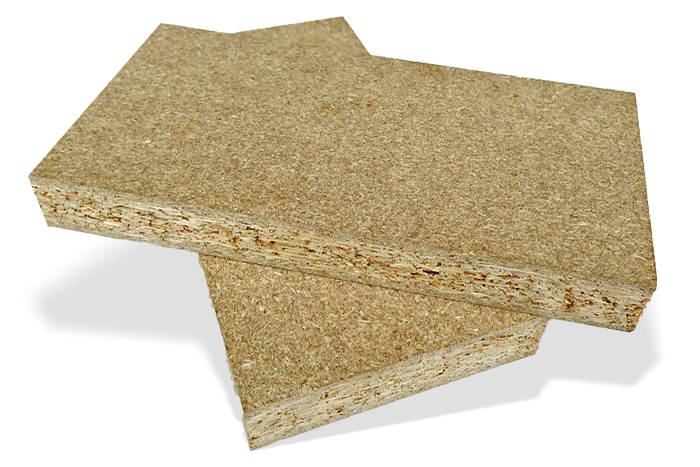
E0 grade eco-friendly particle board is produced from high-quality wood chips through multiple processes including screening, drying, forming and hot pressing. Low-formaldehyde eco-adhesives are adopted in production, with strict control over raw material ratios and hot pressing parameters to curb formaldehyde emissions at the source, enabling the panels to meet the E0 environmental standard. Finished panels have a mild scent without sharp odors. After furniture fabrication and installation, lengthy ventilation for odor removal is unnecessary, shortening the waiting period before occupancy and supporting fast delivery schedules in the home renovation sector.
The panel features a uniform internal structure with neatly arranged wood particles. Formed integrally under high temperature and pressure, it delivers consistent density and resists hollowing and delamination. It offers reliable screw holding power; hardware fasteners achieve firm engagement and are less prone to loosening or falling off after long-term use, making the board suitable for building all types of fixed cabinets such as wardrobes, kitchen cabinets, bookcases and TV cabinets. Its bending and compression resistance handles ordinary household loads. Placing heavy objects or opening and closing cabinet doors will not cause surface deformation or warpage.
In terms of processing performance, E0 grade eco-friendly particle board works well with standard cutting, edge banding and drilling operations at furniture factories. It has a smooth, even surface with clean cut edges and excellent edge banding adhesion, reducing dust accumulation and moisture penetration through gaps. Its moisture resistance suits ordinary indoor environments, coping with daily fluctuations in household temperature and humidity to slow moisture-induced swelling, mildew and aging, thus extending cabinet service life.
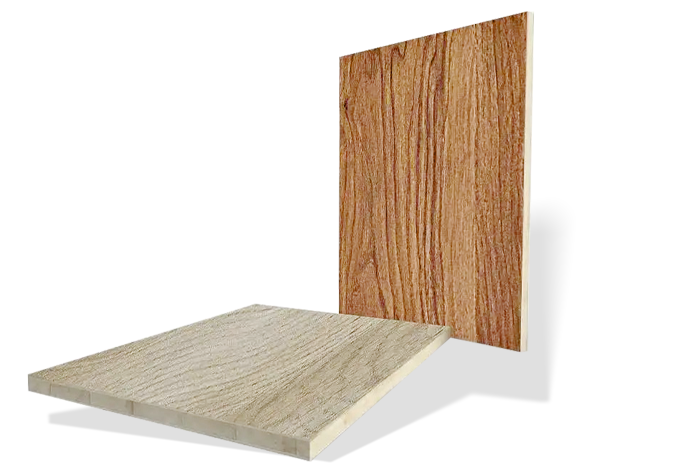
This particle board is suitable for various home cabinet applications, including storage and decorative cabinets in residential spaces. It can also be used to fabricate commercial indoor furniture, office cabinets, display stands and other fixtures, satisfying interior material requirements across multiple scenarios. A wide selection of panel decors is available to match mainstream home styles such as minimalist, light luxury and log styles. After surface finishing, the panels display natural grain patterns that align with contemporary home aesthetics.
Mass-produced E0 grade eco-friendly particle board maintains consistent quality, with uniform thickness and density within the same batch. It meets the mass custom production demands of furniture factories and reduces material compatibility issues during processing. The board supports large-scale manufacturing, compatible with automated cutting equipment for standardized cabinet production. It can also be custom-cut for non-standard house layouts and bespoke dimensions to accommodate diverse home design schemes.
Backed by mature engineered wood manufacturing technology, E0 grade eco-friendly particle board balances environmental performance and structural properties. It satisfies core indoor material requirements of the current home improvement industry, providing a qualified substrate option for whole-house customization and furniture manufacturing, and meeting steady supply and application demands in the home decoration market.




 Mobile Number:Zhang Zong 13812811801 Xie Zong 15618328869
 Marketing Call:0512-52672388
 Fax Number:0512-52671910


 Home
Home
 Wechat
 Tell
Tell