

News Navigation
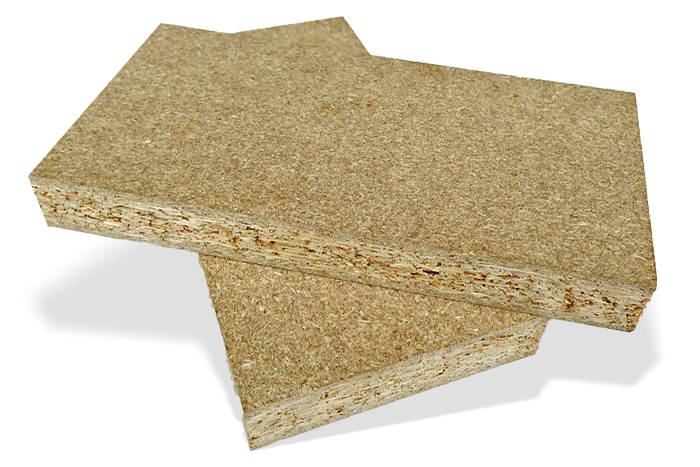
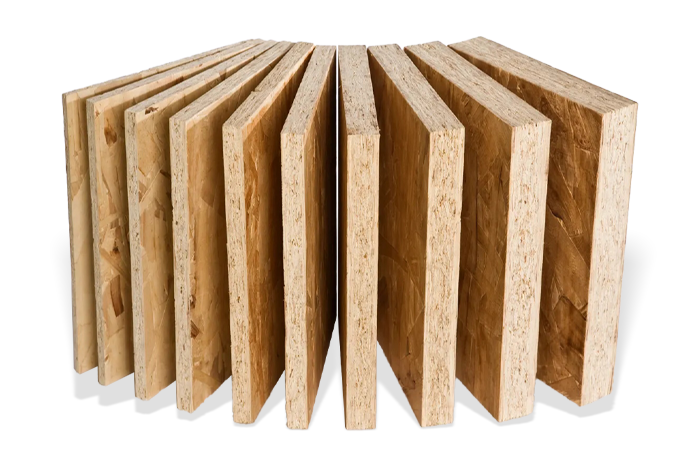
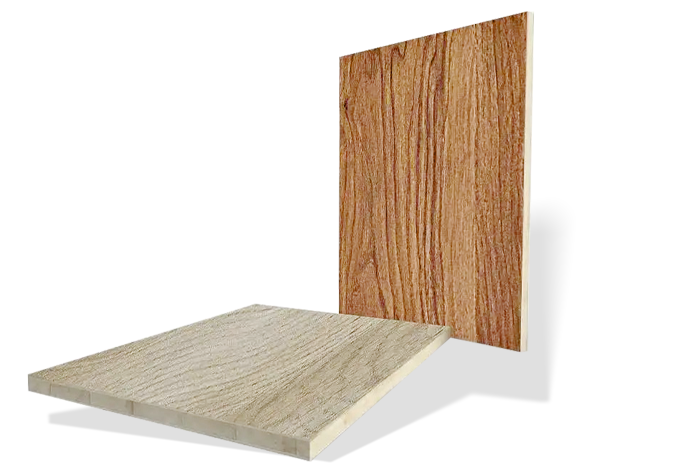
With continuous upgrading of indoor living‑environment standards, the home decoration, commercial fit‑out and custom‑furniture industries have set higher requirements for base materials in terms of environmental performance, structural stability and process compatibility. Conventional particleboards are mostly produced with ordinary adhesive systems, which release trace harmful substances during service and tend to cause odor accumulation in enclosed spaces. In addition, such boards feature loose internal structure and poor moisture resistance. Long‑term use may lead to moisture‑induced swelling, cabinet deformation and joint cracking. Adopting a brand‑new formaldehyde‑free production process combined with optimized hot‑press forming technology, formaldehyde‑free ENF‑grade particleboard improves environmental performance and physical properties starting from raw‑material selection, and meets panel application demands for modern residential and commercial spaces.
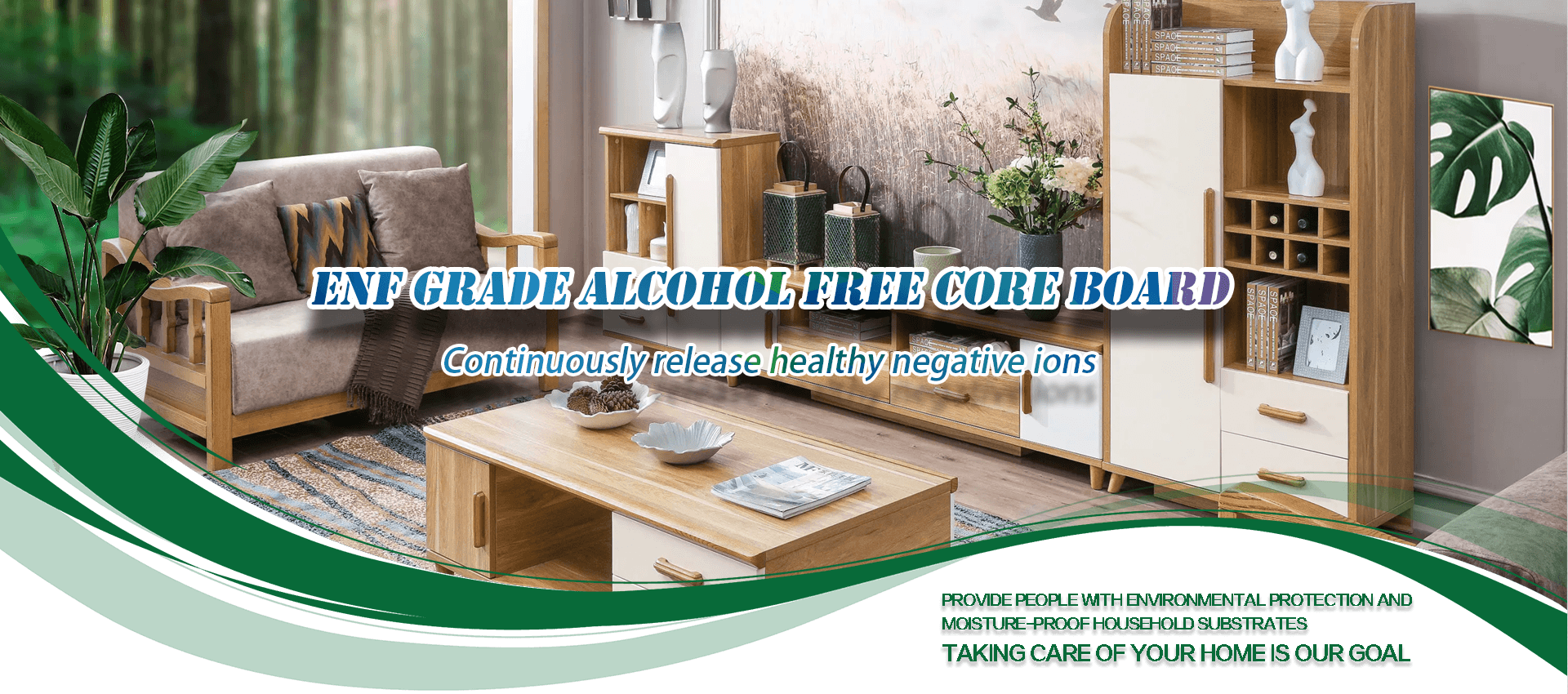
Environmental performance stands as the core highlight of this particleboard. No formaldehyde‑containing adhesives are added throughout production. Wood chips are bonded with formaldehyde‑free adhesive systems. Its formaldehyde emission complies with the national ENF‑grade limit and stays at a low industry level. Emissions of volatile substances such as TVOC are also controlled to cut indoor air pollutants at source. Long‑term vacant ventilation after renovation is unnecessary, shortening occupancy and commissioning cycles. Suitable for finishing materials in various enclosed indoor spaces, it conforms to the prevailing trend of green home renovation.
Formed by layered mat forming and uniform hot pressing, the board features neatly‑arranged wood chips and consistent substrate density with a compact, robust structure. Compared with ordinary particleboard, it has fewer internal voids and even stress distribution for greatly enhanced deformation resistance. It tolerates normal indoor temperature and humidity fluctuations and resists moisture swelling, surface bulging and edge warping. It delivers stable cabinet performance for long‑term service in humid southern regions and floor‑heating environments.
It offers reliable load‑bearing and fastening performance with excellent screw‑holding power. Hardware fittings achieve firm engagement after installation. Screw loosening and hole‑delamination rarely occur under repeated opening‑closing and vibration stress, satisfying hardware assembly requirements for wardrobes, cabinets, bookcases and whole‑house custom cabinetry. Its bending and compression resistance fits standard cabinet structural designs and supports popular styling solutions such as floor‑to‑ceiling single‑panel doors and tall cabinets, providing qualified base material for diversified custom‑furniture designs.
Boasting outstanding process compatibility, the board supports various post‑processing operations for furniture manufacturing. Its smooth, uniform substrate surface can be directly finished with veneering, baking paint and film lamination. Finishes adhere tightly without bubbles, wrinkles or delamination for consistent finished appearance. It cuts, drills and slots cleanly with smooth edges free of chipping and spalling. Well‑suited for automated mass production, it reduces rework rates and matches large‑scale production workflows of furniture factories.
Thanks to multiple material advantages, formaldehyde‑free ENF‑grade particleboard serves a wide range of application scenarios. For residential use, it applies to custom‑made bedroom wardrobes, entrance cabinets, kitchen units and children‑room furniture for long‑term living spaces. For commercial fit‑out projects, it is widely used for office storage cabinets, exhibition display cases, hotel guest‑room cabinets and training‑institute furniture for densely‑occupied public areas with prolonged enclosed occupancy. Further applications include senior‑care facilities, interior soft‑furnishing components and base layers for small‑scale commercial partitions, covering mainstream residential and commercial finishing fields.
Manufactured under strict standardized procedures, every stage including raw‑material screening, mat forming, hot pressing and conditioning is closely controlled. Uniform thickness, density and flatness are guaranteed within each batch with minimal batch‑to‑batch variation to ensure consistency in mass furniture production. Free of residual odor, finished furniture products produce no pungent smell, making it ideal for scenarios with stringent indoor‑air‑quality requirements.
Against the backdrop of popularized green building materials, formaldehyde‑free, low‑emission and high‑stability base materials have become mainstream market choices. Balancing environmental performance, structural properties and process compatibility, formaldehyde‑free ENF‑grade particleboard addresses various drawbacks of traditional panels. It serves as a reliable base‑material option for custom furniture, interior renovation and commercial projects, and keeps pace with diversified, high‑quality material demands from the market.

 Mobile Number:Zhang Zong 13812811801 Xie Zong 15618328869
 Marketing Call:0512-52672388
 Fax Number:0512-52671910
Company Address:Xushi Nandu Qiaotu, DONGBANG Town, Changshu City, Jiangsu Province

Enterprise wechat
 Home
Home
 Wechat
 Tell
Tell