

You Are Here:Home > Information dynamic
> Industry Trends
News Navigation
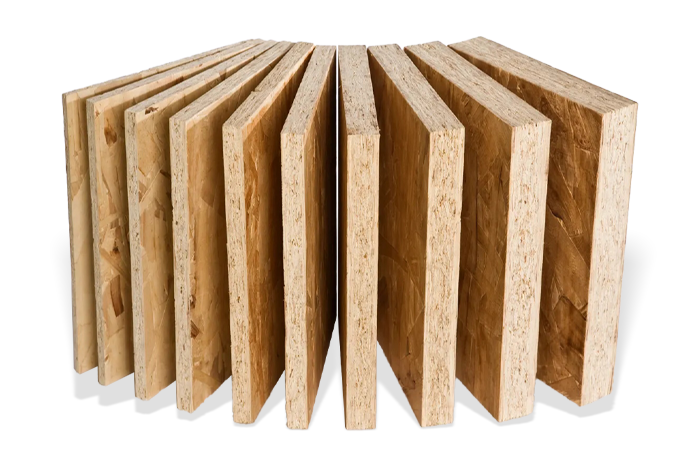
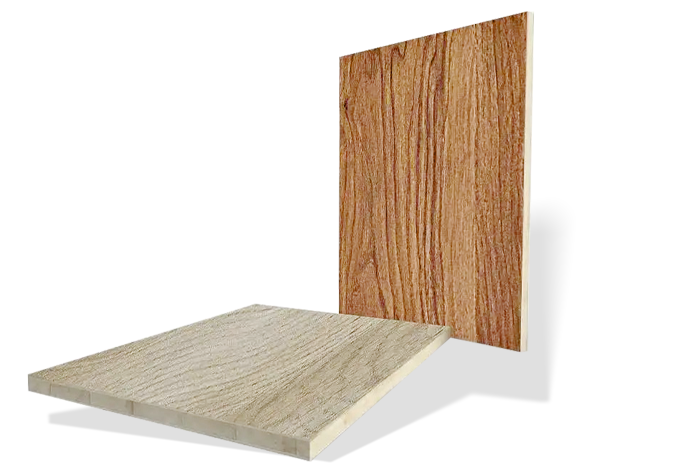
What is the formaldehyde free adhesive in ENF grade environmentally friendly particleboard
source:www.xindongfang.net.cn Time:2025-12-29
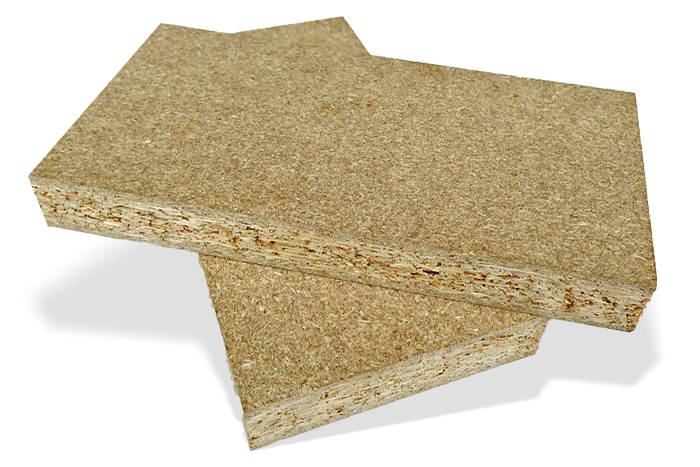
Formaldehyde free adhesive is the core raw material for producing formaldehyde free ENF grade particleboard. The core definition is an adhesive that does not add formaldehyde during the production process, and the free formaldehyde release of the finished product meets the ENF grade standard (≤ 0.025mg/m ³). Its bonding performance needs to meet the requirements of particleboard load-bearing, moisture resistance, etc., while also considering environmental protection and cost-effectiveness. The mainstream types can be divided into three categories: plant-based adhesives, polyurethane adhesives, and inorganic adhesives, as follows:
1、 Mainstream formaldehyde free adhesive categories (sorted by application proportion)
1. Polyurethane adhesive (PUR adhesive, currently the most widely used in the market)
Core ingredients: Isocyanate (MDI) as the main raw material, combined with polyol additives
Formaldehyde free core: The raw materials do not contain formaldehyde, and the reaction process does not release formaldehyde, eliminating formaldehyde pollution from the source
Core advantages: High adhesive strength, excellent water resistance and weather resistance, suitable for both dry and wet production processes; After curing, the stability is strong, and the finished particle board is not easily deformed or cracked, which can meet the ENF environmental protection requirements. At the same time, it can be adapted to the production of thick core and heavy-duty particle boards
Adaptation scenarios: Whole house customized cabinet panels, furniture load-bearing panels, outdoor particleboard, which is currently the adhesive for formaldehyde free ENF grade particleboard
Key points to note: The cost is slightly higher than traditional urea formaldehyde adhesive, and the production process needs to control the process temperature to avoid premature curing of the adhesive
2. Plant based formaldehyde free adhesive (natural and environmentally friendly, cost-effective and suitable for civilian use)
Core Ingredients: Natural plant extracts such as soy protein, starch, tannins, lignin, etc. are used as the core raw materials, combined with environmentally friendly curing agents
Formaldehyde free core: The raw material is naturally formaldehyde free, and the curing reaction releases no aldehydes, making it a "natural and environmentally friendly" adhesive
Segmented Categories&Features
Soy protein adhesive: good adhesion, high cost-effectiveness, excellent drying resistance, suitable for particleboard in dry environments; Slightly weaker water resistance, needs to be modified to improve moisture resistance
Tannin lignin adhesive: made from forestry by-products, highly environmentally friendly, moisture resistant than soy glue, suitable for indoor humid environments (such as kitchen and bathroom cabinets), particle board
Adaptation scenarios: indoor dry environment furniture boards, decorative boards, children's furniture special particleboard, meeting environmental customization needs
Attention: Some categories have insufficient water resistance and need to be optimized through chemical modification. Currently, they are mostly suitable for the production of medium and lightweight particle boards
3. Inorganic adhesive (high temperature resistance, flame retardant, niche scenarios)
Core Ingredients: Using inorganic minerals such as cement, gypsum, and sodium silicate (water glass) as the core raw materials, combined with inorganic curing agents
Formaldehyde free core: All inorganic components, no organic aldehydes, environmental protection level far exceeding ENF level, and no odor itself
Core advantages: high temperature resistance, strong flame retardancy, moisture and mold resistance, good stability, not easily deformed, suitable for special working conditions
Suitable for niche scenarios such as building decorative panels with high fire safety requirements, kitchen specific fire-resistant particleboard, and computer room partition boards
Attention points: After bonding, the weight of the board is slightly heavier, the toughness is slightly poor, the cost is higher, and the proportion of civilian conventional particleboard applications is low
2、 Niche formaldehyde free adhesive (supplementary category)
Epoxy resin formaldehyde free adhesive: high bonding strength, corrosion and moisture resistance, environmentally friendly formaldehyde free, suitable for precision furniture boards, but high cost, few mass production applications
Water based acrylic adhesive: The water-based system is formaldehyde free, with good film-forming properties, suitable for thin particleboard and decorative veneer particleboard, and slightly weaker weather resistance
3、 Core judgment criteria for formaldehyde free adhesives (key to adapting to ENF grade particleboard)
Formaldehyde free raw materials: Formaldehyde, urea formaldehyde resin, phenolic resin and other aldehyde containing components shall not be added to the raw materials for adhesive production, and environmental protection shall be controlled at the source
Formaldehyde free reaction: No free formaldehyde is produced during the curing reaction process, avoiding secondary pollution
Finished product meets the standard: After being combined with the production process of particleboard, the free formaldehyde emission of the finished product is ≤ 0.025mg/m ³, which complies with the ENF standard of GB/T 39600-2021 "Classification of Formaldehyde Emission from Artificial Boards and Their Products"
Performance standards: The adhesive strength, water resistance, and aging resistance must meet the standards for the use of particleboard to avoid environmental compliance but performance failure
1、 Mainstream formaldehyde free adhesive categories (sorted by application proportion)
1. Polyurethane adhesive (PUR adhesive, currently the most widely used in the market)
Core ingredients: Isocyanate (MDI) as the main raw material, combined with polyol additives
Formaldehyde free core: The raw materials do not contain formaldehyde, and the reaction process does not release formaldehyde, eliminating formaldehyde pollution from the source
Core advantages: High adhesive strength, excellent water resistance and weather resistance, suitable for both dry and wet production processes; After curing, the stability is strong, and the finished particle board is not easily deformed or cracked, which can meet the ENF environmental protection requirements. At the same time, it can be adapted to the production of thick core and heavy-duty particle boards
Adaptation scenarios: Whole house customized cabinet panels, furniture load-bearing panels, outdoor particleboard, which is currently the adhesive for formaldehyde free ENF grade particleboard
Key points to note: The cost is slightly higher than traditional urea formaldehyde adhesive, and the production process needs to control the process temperature to avoid premature curing of the adhesive
2. Plant based formaldehyde free adhesive (natural and environmentally friendly, cost-effective and suitable for civilian use)
Core Ingredients: Natural plant extracts such as soy protein, starch, tannins, lignin, etc. are used as the core raw materials, combined with environmentally friendly curing agents
Formaldehyde free core: The raw material is naturally formaldehyde free, and the curing reaction releases no aldehydes, making it a "natural and environmentally friendly" adhesive
Segmented Categories&Features
Soy protein adhesive: good adhesion, high cost-effectiveness, excellent drying resistance, suitable for particleboard in dry environments; Slightly weaker water resistance, needs to be modified to improve moisture resistance
Tannin lignin adhesive: made from forestry by-products, highly environmentally friendly, moisture resistant than soy glue, suitable for indoor humid environments (such as kitchen and bathroom cabinets), particle board
Adaptation scenarios: indoor dry environment furniture boards, decorative boards, children's furniture special particleboard, meeting environmental customization needs
Attention: Some categories have insufficient water resistance and need to be optimized through chemical modification. Currently, they are mostly suitable for the production of medium and lightweight particle boards
3. Inorganic adhesive (high temperature resistance, flame retardant, niche scenarios)
Core Ingredients: Using inorganic minerals such as cement, gypsum, and sodium silicate (water glass) as the core raw materials, combined with inorganic curing agents
Formaldehyde free core: All inorganic components, no organic aldehydes, environmental protection level far exceeding ENF level, and no odor itself
Core advantages: high temperature resistance, strong flame retardancy, moisture and mold resistance, good stability, not easily deformed, suitable for special working conditions
Suitable for niche scenarios such as building decorative panels with high fire safety requirements, kitchen specific fire-resistant particleboard, and computer room partition boards
Attention points: After bonding, the weight of the board is slightly heavier, the toughness is slightly poor, the cost is higher, and the proportion of civilian conventional particleboard applications is low
2、 Niche formaldehyde free adhesive (supplementary category)
Epoxy resin formaldehyde free adhesive: high bonding strength, corrosion and moisture resistance, environmentally friendly formaldehyde free, suitable for precision furniture boards, but high cost, few mass production applications
Water based acrylic adhesive: The water-based system is formaldehyde free, with good film-forming properties, suitable for thin particleboard and decorative veneer particleboard, and slightly weaker weather resistance
3、 Core judgment criteria for formaldehyde free adhesives (key to adapting to ENF grade particleboard)
Formaldehyde free raw materials: Formaldehyde, urea formaldehyde resin, phenolic resin and other aldehyde containing components shall not be added to the raw materials for adhesive production, and environmental protection shall be controlled at the source
Formaldehyde free reaction: No free formaldehyde is produced during the curing reaction process, avoiding secondary pollution
Finished product meets the standard: After being combined with the production process of particleboard, the free formaldehyde emission of the finished product is ≤ 0.025mg/m ³, which complies with the ENF standard of GB/T 39600-2021 "Classification of Formaldehyde Emission from Artificial Boards and Their Products"
Performance standards: The adhesive strength, water resistance, and aging resistance must meet the standards for the use of particleboard to avoid environmental compliance but performance failure
Previous:
How to select moisture‑resistant and eco‑friendly…
Next:
What are the applications of odorless E0 grade en…
Related articles

 Mobile Number:Zhang Zong 13812811801 Xie Zong 15618328869
 Marketing Call:0512-52672388
 Fax Number:0512-52671910
Company Address:Xushi Nandu Qiaotu, DONGBANG Town, Changshu City, Jiangsu Province

Enterprise wechat
+
wechat number:底部微信
 Home
Home
 Wechat
 Tell
Tell